
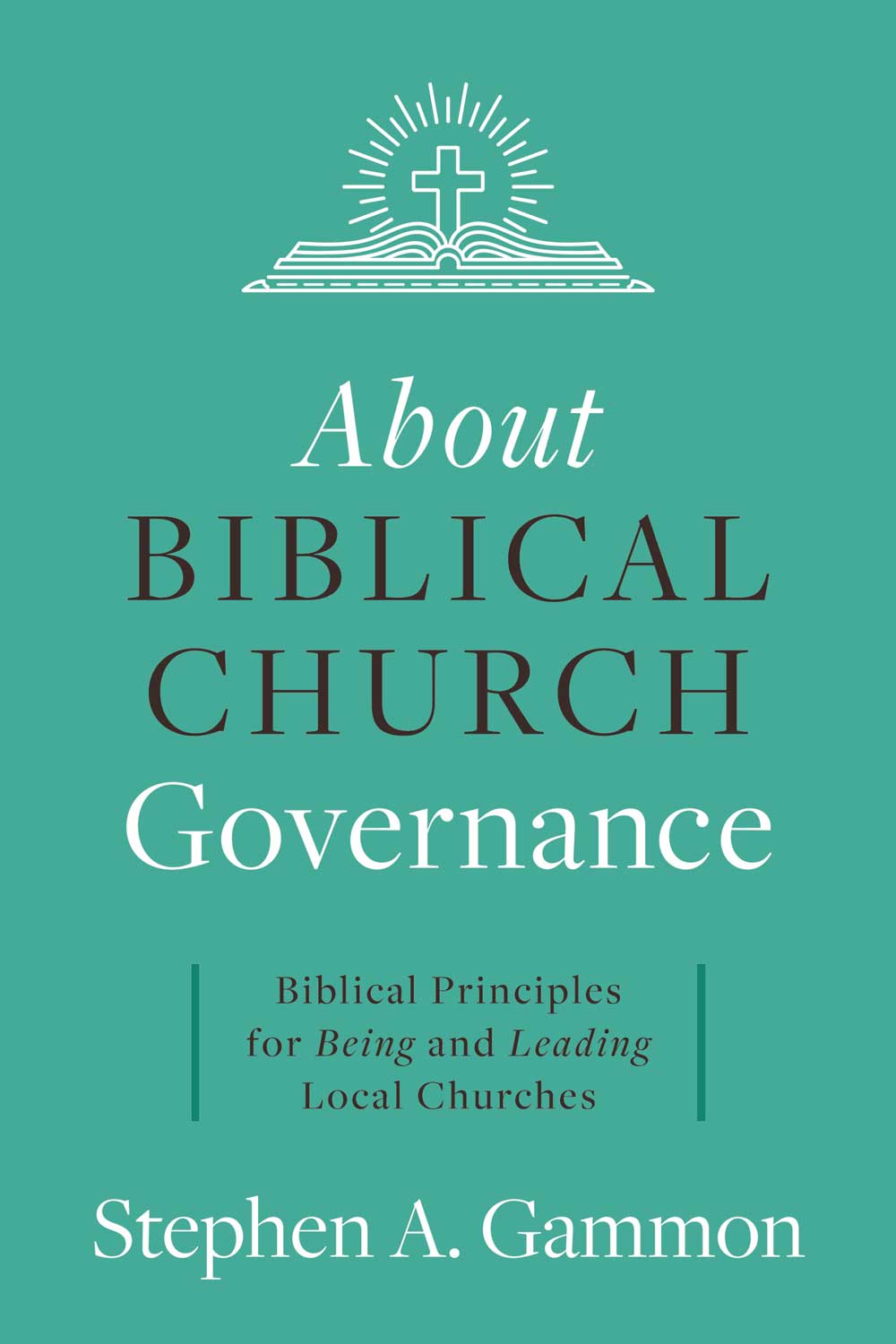
About Biblical Church Governance
Original price was: $16.99.$11.99Current price is: $11.99.
A clear, Scripture-based exploration of how the Body of Christ can be led, structured, and united to fulfill its mission under the headship of Jesus.
Share this product
There are basic biblical principles for local churches in all times and cultural contexts. Stephen Gammon has studied this guidance throughout nearly five decades of ministry, growing up as a son and grandson of pastors, serving as an overseer of local churches, being a denominational leader and a military chaplain among diverse faith backgrounds, and through interdenominational connections regionally, nationally, and internationally. His life experiences have taught him that when church leaders know and apply basic and clear biblical principles of governance, positive results come. Conversely, when these principles are unknown or disregarded, hard consequences follow.
This book is a summary review of key principles for being and leading local churches. It includes examining some beautiful biblical “photos” of how Jesus wants us to see His Church, or pages of the architect’s “blueprints” for building His Church. Local churches benefit greatly when biblical concepts of headship, leadership, and membership are understood and implemented. Additionally, this book examines key faith convictions in historic biblical governance, with some important cautions for local church leaders.
All sections of this study include some questions for personal reflection and for discussion among church leaders, because whenever God speaks to His people, He always calls for a response. The biblical principles covered in About Biblical Church Governance apply to churches of all governance models, including episcopal, presbyterian, and congregational structures.
From lessons learned in congregational ministry experience and affiliation with the CCCC in the USA, and internationally with the World Evangelical Congregational Fellowship (WECF), Stephen Gammon has also added a helpful addendum for churches on practicing biblical congregationalism.
About the Author
Rev. Dr. Stephen A. Gammon is a third-generation minister who has walked with God since his early childhood. He has served nearly five decades wherever and however God has directed him, including in leadership as a church youth director, in three local church pastorates, as a U.S. Navy Chaplain, as a denominational leader of ministers and churches (Conservative Congregational Christian Conference, USA), and on the leadership team of the World Evangelical Congregational Fellowship. Steve and his wife, Helen, reside in Northfield, Minnesota. They have three adult children, a daughter-in-law, a son-in-law, four grandsons, and a dog named Fenway.
Steve is the author of three additional books, all published by Aneko Press: Walking with God: 101 Lessons for Life and Ministry (2014), Walking With God Through Deep Valleys: Lessons on Finding Contentment When Life Is Hard (2020), and a yearlong daily devotional titled Because God . . . I Can: 12 Themes on Following Jesus (2021), which are all available for free eBook download.
Related products
-
Mango Tree Gospel
Original price was: $14.99.$10.49Current price is: $10.49. Add to cartWhile this is a story about a particular place and its people, it’s also a story about all of us: How God works through broken people and in broken places to do beautiful things.
-
The Pursuit of God (Hardcover)
Original price was: $15.99.$10.99Current price is: $10.99. Add to cartCome near to the holy men and women of the past and you will soon feel the heat of their desire after God. Let A. W. Tozer’s pursuit of God spur you also into a genuine hunger and thirst to truly know God.
-

Filomena: Daughter of Light
$15.99 Christian BookA Colombian woman’s incredible journey to freedom in Christ.
-
Ethical
Original price was: $14.99.$10.49Current price is: $10.49. Add to cartThe Christian desire to honor God and be faithful to him is the most important reason for learning and practicing what is ethical. For this reason, living an ethical lifestyle will not be done out of an attitude of sacrifice, but out of a feeling of appreciation and desire for God’s will.
1 review for About Biblical Church Governance
The purpose of this book was to provide a blueprint for what the design of Christ’s Church should be according to the information given in the Bible.
The author begins by describing what the Church is, isn’t and then what it should be. He breaks down the three forms of historic church governance: episcopal, presbyterian and congregational and elaborates on what works for each and what doesn’t.
He goes on to discuss the authority and responsibilities of the leaders. Emphasis is put on Who is the true leader of the Church. “Because Jesus calls it my church, all who would lead it, and all who are part of it, are to let go of personal ownership and preferences in order to focus their hearts on discerning and doing the will of the one who is the foundation of our very being and the head of the Church, even the Lord Jesus Christ.”
Next, the essential faith convictions are considered since they are the foundation to guard against heresy. In regards to the foundational truth, Jesus Christ is the only way to salvation, I loved this question he asked, “If there was any other way, would God have sent His beloved Son to suffer so violently and to die in such agony?” So true!
Lastly, the book ends with cautions to be careful in governance. A choice piece of wisdom, “The church’s primary focus must not be on projects or activities that offer temporary enjoyment or comfort. Our focus must not be on a property or building for purposes of earthly ease or esthetic beauty. Should these become our focus, we will miss out on opportunities that God has prepared for us to bring His love to others in Jesus’ name. … When love becomes our highest priority as a church, we will be more focused on personal relationships than on personal accomplishments.”
A nice feature is an opportunity for the reader(s) to discuss how to apply what they have read. There’s a section for personal reflection and for local church leaders’ discussion. This book could be an excellent source for church leadership to assess how close they mirror the biblical blueprint for the local church.