
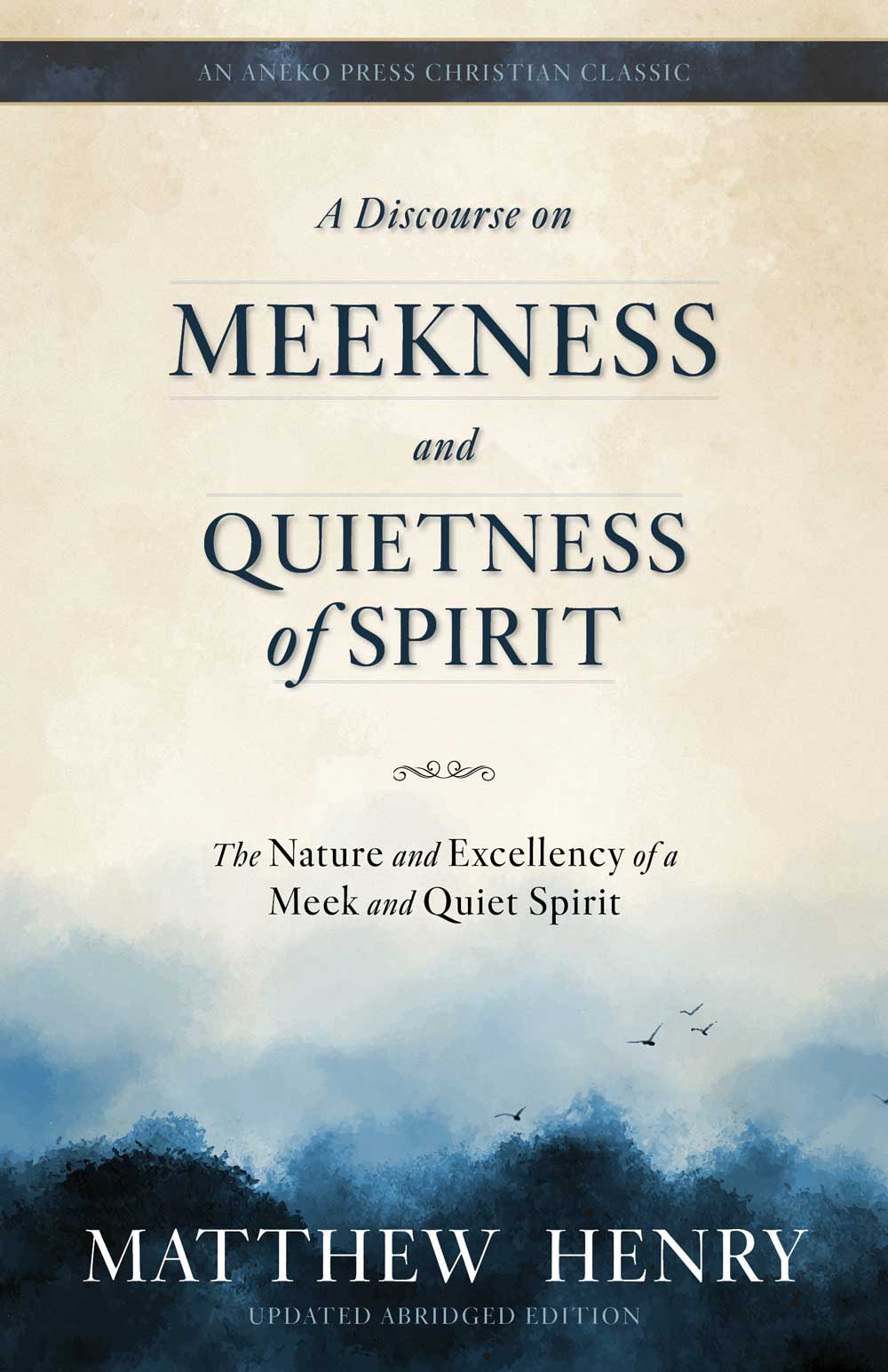
A Discourse on Meekness and Quietness of Spirit
Original price was: $15.99.$5.99Current price is: $5.99.
This carefully updated edition of Matthew Henry’s timeless work calls believers to cultivate a meek and quiet spirit through clear language that preserves the beauty and spiritual power of the original.
Share this product
We must be of a meek spirit. Meekness is an easiness of spirit – not a sinful easiness by which we might be defiled, but a gracious easiness to be worked upon by that which is good, as in those whose heart of stone is taken away and to whom a heart of flesh is given.
Meekness accommodates the soul to every happening and so makes a person calm within himself and toward all around him. When the grace of meekness gains dominion in the soul, it alters its temperament and submits it to authority. Then the wolf dwells with the lamb, and the leopard lies down with the kid, and a little child may lead them; for enmities are laid aside, and there is nothing to hurt or destroy.
Quietness is the evenness, the composure, and the rest of the soul, and it sets forth both the nature and the excellency of the grace of meekness. Indeed, the greatest comfort and happiness of man is sometimes expressed by this very word – quietness.
Quietness is recommended to us in Scripture as both a grace to be clothed with and a duty to be practiced. In the midst of all the insults and injustices that are, or may be, offered to us, we must keep our spirits composed and undisturbed, demonstrating by a calm, even, and steady conduct that they are so. This is quietness.
YouTube Audiobook
Related products
-
Don’t Die in Your Sins
Original price was: $12.99.$2.99Current price is: $2.99. Add to cartFor most people, death is either a great mystery or a subject of great denial. However, the fact remains – we all die. What if this life is not all there is? What if there actually is life after death?
-

No mueras en tus pecados (Don’t Die in Your Sins – Spanish)
Original price was: $12.99.$2.99Current price is: $2.99. Add to cartPara la mayoría, la muerte es un gran misterio o tema de gran negación. Sin embargo, hay un hecho real que sigue allí: todos moriremos. ¿Qué pasaría si esta vida no es la única? ¿Qué, si en verdad hay vida después de la muerte?
-
Jesus Came to Save Sinners
Original price was: $15.99.$4.99Current price is: $4.99. Add to cartA thorough message of salvation by faith in Christ, by the “prince of preachers,” Charles H. Spurgeon.
-
The Pursuit of God
Original price was: $12.99.$4.99Current price is: $4.99. Add to cartCome near to the holy men and women of the past and you will soon feel the heat of their desire after God. Let A. W. Tozer’s pursuit of God spur you also into a genuine hunger and thirst to truly know God.
3 reviews for A Discourse on Meekness and Quietness of Spirit
I never would have guessed that there was enough material in the Bible to write about meekness and quietness of spirit. There is. And it was Matthew Henry, the respected Bible commentator who did it! Henry explains that “meekness accommodates the soul to every happening, and so makes a person calm to himself and to everyone around him.” He goes on to say that meekness towards God is an “easy and quiet submission of the soul to His whole will, according as He is pleased to make it known, whether by His Word or by His providence.”
In regards to the excellence of meekness, Henry believes that “the more quiet and calm we are, the more we are like God.” In contrast, he says that “It is for lack of meekness that we are so irritated when someone contradicts or objects to our opinions, desires, and plans, that we think we must have our own saying, right or wrong, and everything our own way, that we are so impatient of competitors, not tolerating anyone who stands in our light or shares in that work of honor that we want to gather to ourselves, that we are so intolerant of criticism, so quick in our uneasiness and resentment of the slightest insult or provocation, and so overflowing in our feelings of injustices, where really there are none, or none intended.”
Wisdom is offered regarding how to live a life of meekness when he says, “Withdraw your affections from this world, and everything in it. The more the world is crucified to us, the more our corrupt passions will be crucified in us.” He adds, “If anyone lacks this meekness of wisdom, let him ask it of God, who gives liberally, and does not upbraid us with our folly (James 1:5).”
Friend, meekness and quietness are desirable character qualities, but are only found in us if the Spirit of the Lord Jesus Christ lives within us. You, too, can be someone who displays meekness and His character. It begins by understanding God’s character: He is love, He is holy and righteous. Contrast this with our character: morally corrupt. Our nature is that we are deceitful, liars, think evil thoughts and have rebelled against the God who created us by choosing to sin. Because of His holy nature, God cannot tolerate sin. Therefore, each of us is guilty and condemned before God. Yet, though our character is defiantly opposed to God’s character, God has offered a solution, a way to be able to stand before Him, justified, because our sin has been atoned for and canceled out. The good news is that this is exactly what happened at the Cross of Calvary. Jesus, God’s Son, out of love for mankind became that perfect substitution. He took upon Himself, the only perfect man who ever lived, every sin ever committed, being committed and to be committed and paid the penalty of death for those sins in our place. We were guaranteed eternal death and damnation, He took that sin and its consequences upon Himself and gave us eternal life in its place. Who receives this gift of an eternal inheritance/salvation through God’s Son? Only those who acknowledge that they have a sin problem, that they aren’t worthy to stand before God and His judgment and do so with grief. They desire to turn from sin. This is what repentance is and it comes from the heart. None of us has the power to live a righteous life in our own strength. This only comes from placing our trust in the Lord Jesus Christ, believing that He has made atonement for us and that when God looks at us, He sees Jesus’ purity and righteousness. What Jesus has done for us brings about a great joy within us and a desire to be loyal, serving Him with our lives. It changes the way we think, our emotions and our actions. Meekness and quietness will be character qualities that will begin to be developed within you. God bless!
A Masterclass in Inner Calm: Why Matthew Henry’s Meekness is the Ultimate “Quiet Place”
In an era where the loudest voice in the room usually wins (and the internet is essentially a global shouting match), Matthew Henry’s “A Discourse on Meekness and Quietness of Spirit” feels less like an old religious text and more like a radical act of rebellion.
If you’re looking for a roadmap to keeping your cool when the world loses its collective mind, this is your manual. Here is why this classic remains a profound “must-read” for the modern soul.
The Core Philosophy
Henry doesn’t define meekness as being a “doormat.” Instead, he presents it as strength under control. He argues that a quiet spirit isn’t about being silent; it’s about being settled.
“Meekness is the silent submission of the soul to the providence of God.”
Why This Review Is a Five-Star Rave:
Radical Emotional Intelligence: Long before “EQ” was a buzzword, Henry was dissecting the anatomy of anger. He provides a brilliant psychological breakdown of why we lose our tempers and how to cultivate a “coolness of spirit” that protects our mental health.
* The “Quietness” Factor: Henry treats quietness as an internal habitat. It’s the art of not letting external storms create an internal shipwreck. In our world of constant notifications, his advice on guarding one’s peace is incredibly grounding.
* Timeless Wit and Wisdom: Henry has a way with words that is both piercing and gentle. He manages to convict you of your grumpiness without making you feel attacked—it’s like being coached by a very kind, very wise grandfather.
* Practicality: This isn’t just high-minded theology. It’s a tactical guide on how to handle insults, how to respond to “unreasonable men,” and how to maintain joy regardless of your circumstances.
Final Verdict
Matthew Henry’s work is a cooling balm for a feverish age. It’s a short read, but it’s dense with “lightbulb moments.” If you find yourself constantly frustrated by the news, your neighbors, or your own temper, give this classic a seat on your nightstand. It’s an invitation to a life that is significantly less stressful and infinitely more dignified.
Highly recommended for anyone looking to trade their inner chaos for a bit of classic, steady peace.
This is a good book on a topic that is not much discussed anymore, yet is greatly needed. I learned much from this book that can help me much in my own life and in my relationships with others. Matthew Henry simply writes about what the Bible says about meekess and how we should live and act in relation to the Bible’s teachiing. We could all benefit from the truth and wisdom in this book.